
Short Answer
If your garage door is sluggish, hesitates, or seems stuck to the slab on a cold morning in Mims, it's almost certainly not frozen solid the way it would be up north. What's happening is moisture: condensation from humid Florida air meeting a cold concrete floor and metal track, combined with rust, thickened lubricant, or a weather seal that's gripped the slab overnight. The fix is usually simpler than people expect, but it helps to check things in the right order.
What You'll Notice
- The door hesitates or jerks when it starts moving, especially on the first attempt of the day
- The bottom seal seems glued to the concrete and needs a firm tug to break free
- The opener strains, makes a louder motor noise, or trips the safety reversal before the door fully closes
- Rollers squeak or grind more than usual
- The remote or wall button seems to have a delay before the door responds
None of these mean you need a whole new system. They're symptoms, and a technician works backward from them to find the actual cause.
Causes, in the Order a Technician Checks Them
1. The Weather Seal Is Stuck to the Slab
This is the first thing to rule out because it's the most common and the easiest to fix. Overnight humidity condenses on the cold concrete, and the rubber astragal along the bottom of the door can bond to it slightly, especially if the seal has hardened with age. In the morning the door tries to lift and drags against that resistance.
The fix: Gently break the seal free by hand before using the opener, and check the rubber for cracking or flattening. A seal that's lost its flexibility from years of Florida heat and salt air won't release cleanly and should be replaced — this is a quick, low-cost repair.
2. Tracks Are Dirty, Slightly Out of Alignment, or Swollen Wood Jambs Are Pinching Them
Temperature swings between warm afternoons and cooler nights cause metal tracks to contract slightly, and humidity can cause wood door jambs to swell. Either one can pinch the track just enough to create drag that wasn't noticeable in warmer, drier weeks.
The fix: A technician checks the tracks for gaps, dents, or narrowing, cleans out any debris or dried grease buildup, and resets the track position if it's shifted. If the problem traces back to a swollen jamb, that's a structural fix rather than a hardware one.
3. Lubricant Has Thickened or Washed Out
Standard household oil or old grease on rollers, hinges, and the torsion spring can stiffen slightly in cooler temperatures, and it also tends to collect grit from salt air and humidity over time, turning gummy instead of slick.
The fix: Strip old residue and reapply a silicone-based garage door lubricant, which holds up better across Florida's humidity and heat swings than general-purpose oil. This is standard work in a maintenance and tune-up visit.
4. Spring Tension Has Shifted
Metal springs contract slightly in cooler air, and if a spring was already under extra load from corrosion or age, that small shift can be enough to throw off the balance the opener relies on. This shows up as the opener working harder than normal or the door closing unevenly.
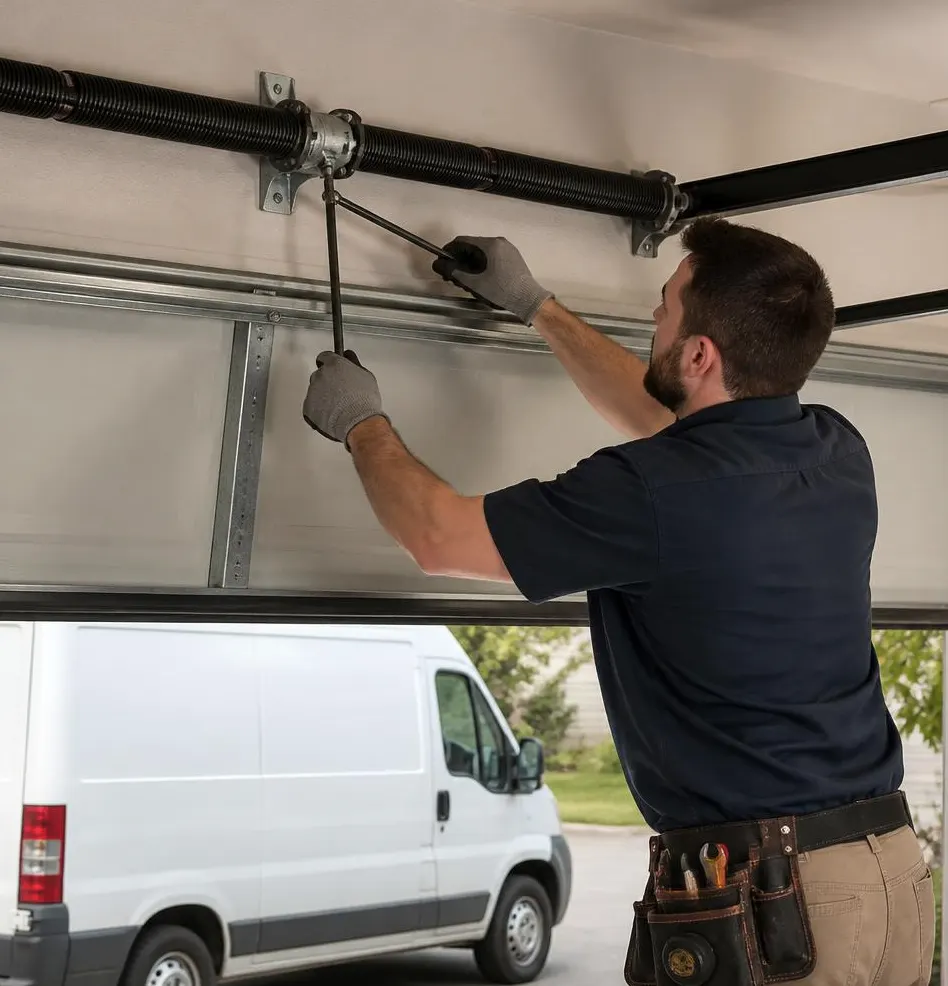
The fix: A technician checks spring tension and condition directly — this isn't a DIY adjustment, since torsion springs are under heavy load. If rust or pitting is present, repair or replacement is the right call before the spring fails under stress.
5. Rust on Rollers or Hinges From Salt Air
Homes closer to the coast see this more, but it shows up throughout north Brevard. Rust adds friction to moving parts, and that friction is more noticeable when everything else is already stiffer from cooler, damp mornings.
The fix: Clean, lubricate, or replace corroded rollers and hinges. Nylon rollers with sealed bearings hold up better than steel in salt-air conditions if a replacement is due anyway.
6. Opener Sensors or Limit Settings Are Off
If the door reverses before closing or hesitates at specific points, condensation on the safety sensor lenses can be the culprit, or the opener's limit settings may need a minor adjustment after a part has been serviced.
The fix: Wipe the sensor lenses clean and confirm alignment. If the issue persists, the opener's settings are checked and recalibrated.
When to Call Mims Door & Opener
If you've broken the seal free, wiped down the sensors, and the door is still dragging, straining, or reversing unexpectedly, it's time to call. We run a full Garage Door Maintenance & Tune-Up that covers lubrication, track alignment, spring tension, and hardware condition in one visit — the same checklist above, done properly. If the door is actually off its track or the spring looks worn or rusted, our Off Track Door Repair and spring repair work get it back to moving the way it should before the issue gets worse.
If your garage door has been sluggish on these cooler mornings, give Mims Door & Opener a call. We serve Mims, Titusville, Scottsmoor, Port St. John, Cocoa, Merritt Island, Oak Hill, and Rockledge, and we'll get it diagnosed and fixed right.