
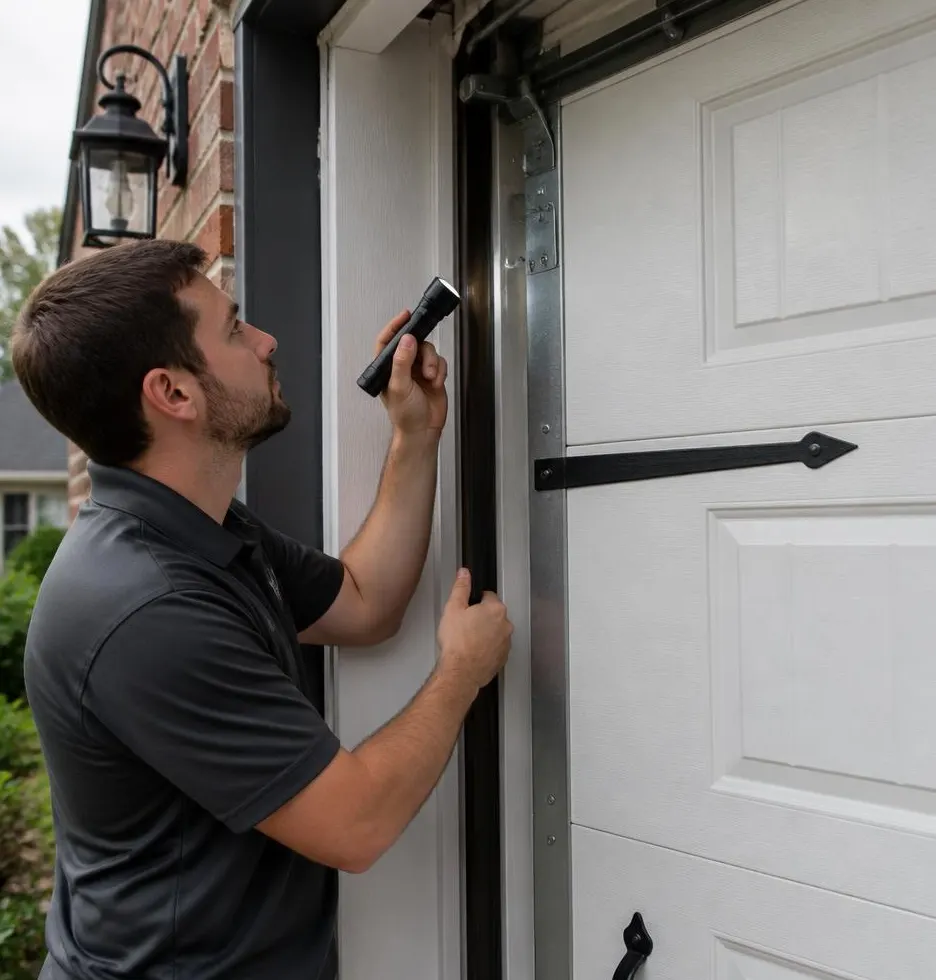
You Hit the Button, and the Door Changes Its Mind
You pull into the driveway after one of those afternoon downpours, hit the remote, and watch the door start down like normal. Then, a foot or two from the concrete, it stops, reverses, and climbs right back up to open. Maybe it does this every single time. Maybe it only happens some evenings. Either way, you're left standing there pressing the button again, wondering if tonight's the night it just stays open for good.
This is one of the most common calls we get, and it's rarely random. A garage door that reverses or refuses to close is almost always telling you something specific — you just have to know where to look.
What You Might Be Seeing
The exact symptom usually points toward the cause, so it helps to notice the pattern:
- The door reverses at roughly the same spot every time, a few inches above the floor
- It reverses the instant it starts moving, almost like it never committed to closing
- It won't move downward at all — the opener light blinks a set number of times when you try
- It closes fine from the wall button but not the remote, or the other way around
- You hear a clicking, grinding, or straining sound right as it tries to close
- The door looks slightly crooked or one side seems to drag as it moves
Keep that pattern in mind — it'll matter in a minute.
Working Through the Causes, in the Order a Technician Checks Them
1. Safety Sensors First
Almost every reversing door comes down to the two small sensors near the floor on each side of the track, usually 4-6 inches up. If their lenses are dirty, knocked out of alignment, or one is staring at sunlight at the wrong angle, the opener assumes something is blocking the door and reverses it as a safety measure. In this part of Florida, humidity and the fine dust that settles after storms build up on those lenses faster than people expect, and a stray leaf blower or lawn edger can nudge a sensor bracket just enough to throw off the alignment. The fix is simple: wipe both lenses, confirm the small indicator lights on each sensor are solid (not blinking), and adjust the bracket until they line up straight across the opening. No tools beyond a screwdriver, usually.
2. Sensor Wiring and Connections
If the lenses are clean and aligned but the problem persists, the wiring running to those sensors is next. Garages here deal with swings in moisture and, closer to the coast, salt-laden air that corrodes exposed wire connections over time. A nicked wire from a stored bike or a corroded splice can cause the same reversing behavior as a dirty lens. This involves tracing the wire runs, cleaning or replacing corroded connectors, and sometimes re-running wire that's been pinched or chewed.
3. Close-Force and Limit Settings on the Opener
Every opener has a setting for how much resistance it tolerates before deciding the door hit an obstruction and reversing. If this is set too sensitive — common after a motor ages or after someone adjusts it without a clear reason — the door can reverse even with a clear path. Correcting this means recalibrating the opener's force and limit settings per the model's specs, not just cranking a dial until it stops happening, since too little sensitivity creates a real safety risk.
4. Track Alignment and Obstructions
Next comes a physical inspection of the tracks themselves. Humidity swings can cause wood door frames to swell slightly, which nudges tracks out of true alignment, and rollers can wear or rust in coastal air. A door that's even slightly off-track will bind as it closes, and the opener reads that resistance as an obstruction. Fixing this means re-securing track brackets, cleaning and lubricating rollers, and in more serious cases, straightening or replacing a bent section of track.
5. Springs and Cables
If the door won't move downward at all, sits crooked, or you hear grinding and strain, the issue has likely moved past the opener and into the springs or cables themselves. A weakening spring makes the door heavier than the opener expects, which can trigger safety reversal or stop it from closing altogether. A frayed or slipped cable causes one side to drop faster than the other, which looks like the door is fighting itself. These aren't adjustments — a worn spring or cable needs to be replaced outright, and this is not a safe DIY repair given the tension involved.
When to Call Mims Door & Opener
If you've checked the sensors and the door still won't close reliably, or if it's visibly crooked, grinding, or refusing to move, that's our cue. We'll run through the same sequence above on-site — sensors, wiring, opener settings, tracks, then springs and cables — and tell you plainly which one is actually causing it. Our Off Track Door Repair and Garage Door Cable Repair services cover the mechanical end of this, and if the opener itself is aging or unreliable, we can talk through a straightforward Garage Door Opener Installation instead of patching the same unit again.
If your garage door in Mims, Titusville, or anywhere else in north Brevard is reversing, stalling, or refusing to close, give Mims Door & Opener a call. We'll get it diagnosed and fixed, and show up when we say we will.